Art For The Love Of Muhammad (PBUH) Traditional Contest, 2026.
The Winners
The Islamic Arts Society is delighted to announce the winners of the 6th “Art for the Love of Prophet Muhammad” (PBUH) contest on the eve of Meraj, 2026. A first-of-its-kind competition to praise our noble Prophet PBUH through art generated worldwide attention. A panel of judges selected the winners based upon (1) Relevance to the theme of the competition (2) Creativity and originality of the idea (3) Effective use of standard elements of art (4) Artistic skill in the use of materials, colors (5) Professional and aesthetic quality, neatness, presentation (6) Authenticity and credibility of work.
This year the competition was divided into Contemporary and Traditional Islamic art. A panel of four judges from the Islamic Arts Society reviewed more than 400 submissions from 24 countries and five continents to select the top entries from each category. Our panel of judges was supervised by eminent artists, Mr. Nihad Dukhan, Mr. A Q Arif, Ms. Aisha Changezi, and Ms. Mona Sajjad.
We present the competition winners here. Please join us in congratulating the winners of our 2026 competition.
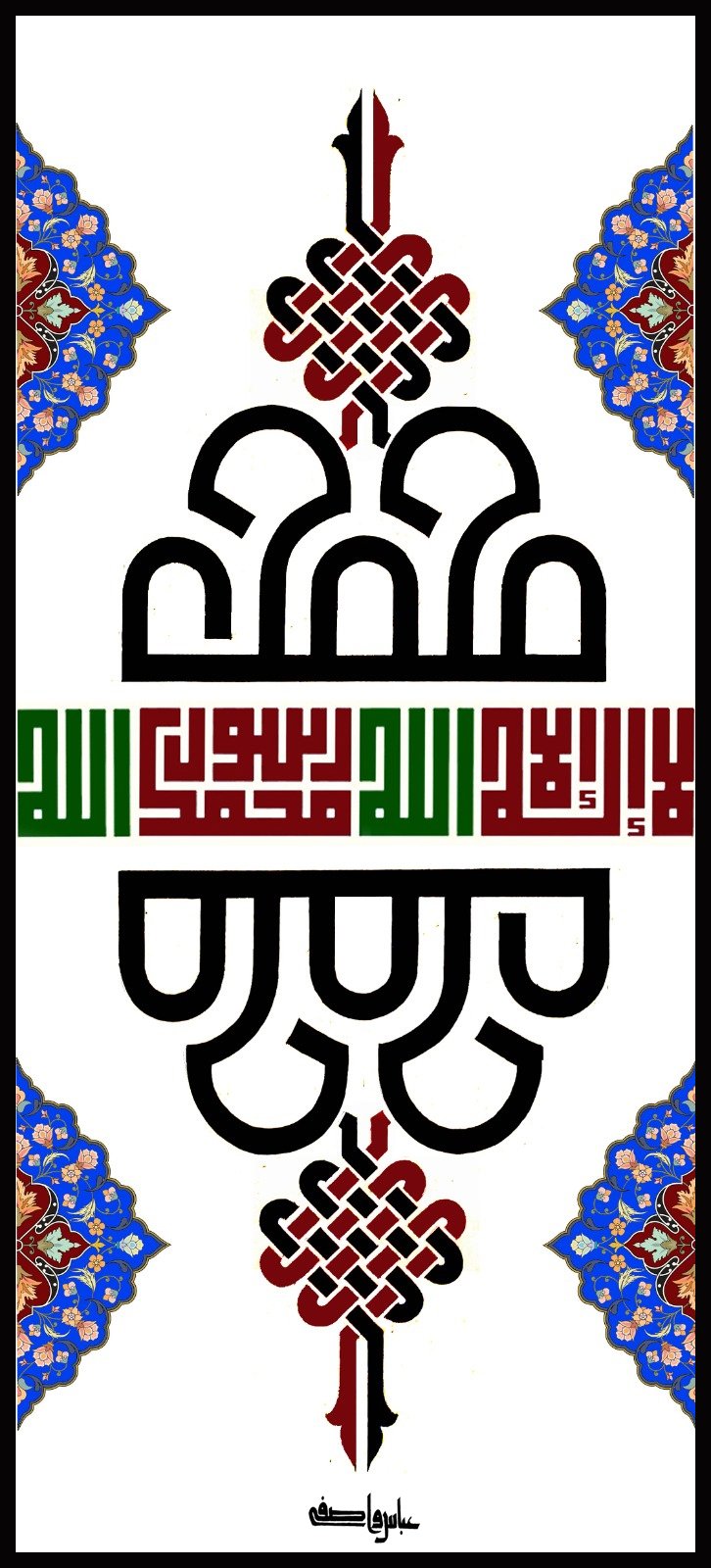
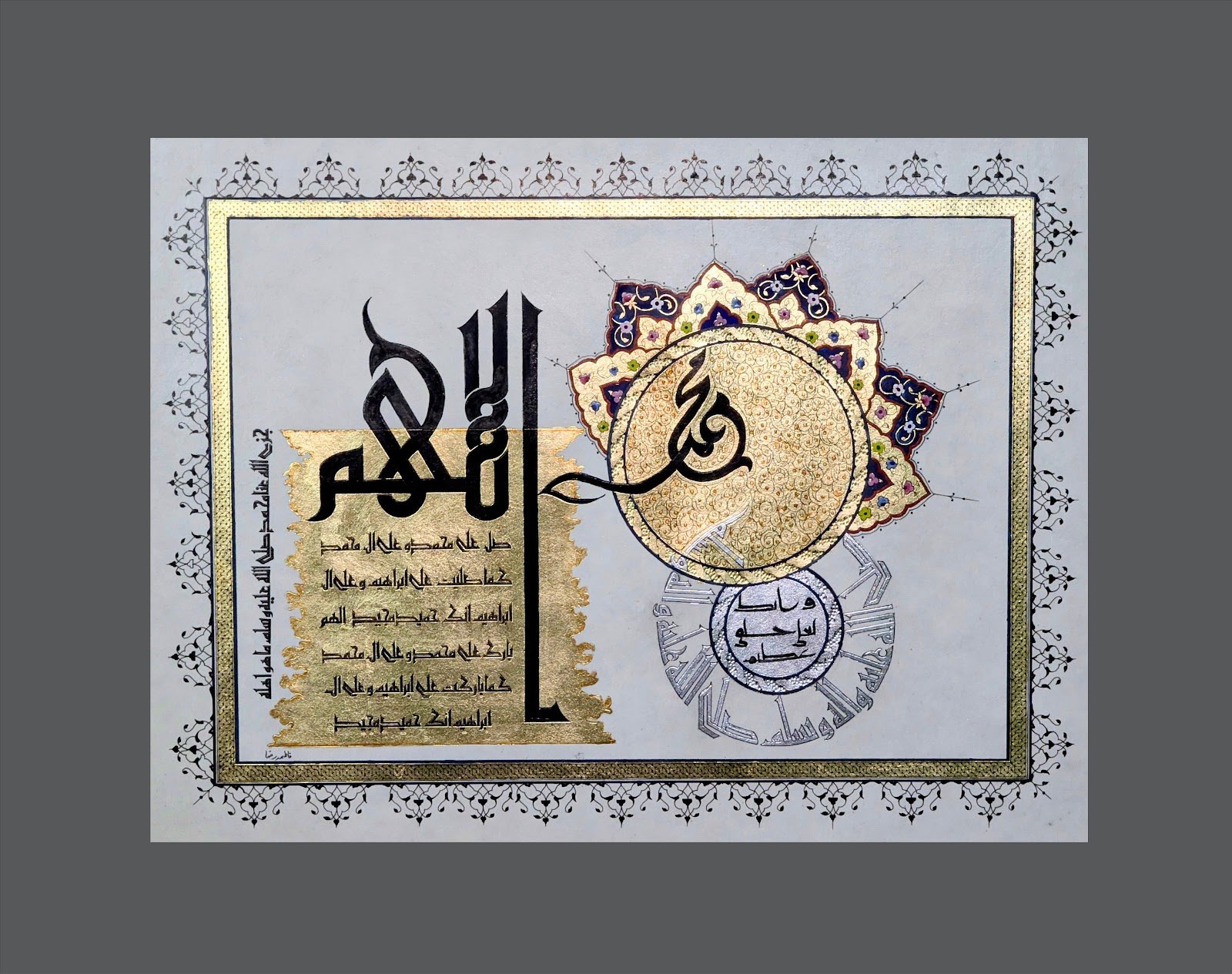
FIRST PRIZE: US $ 1000
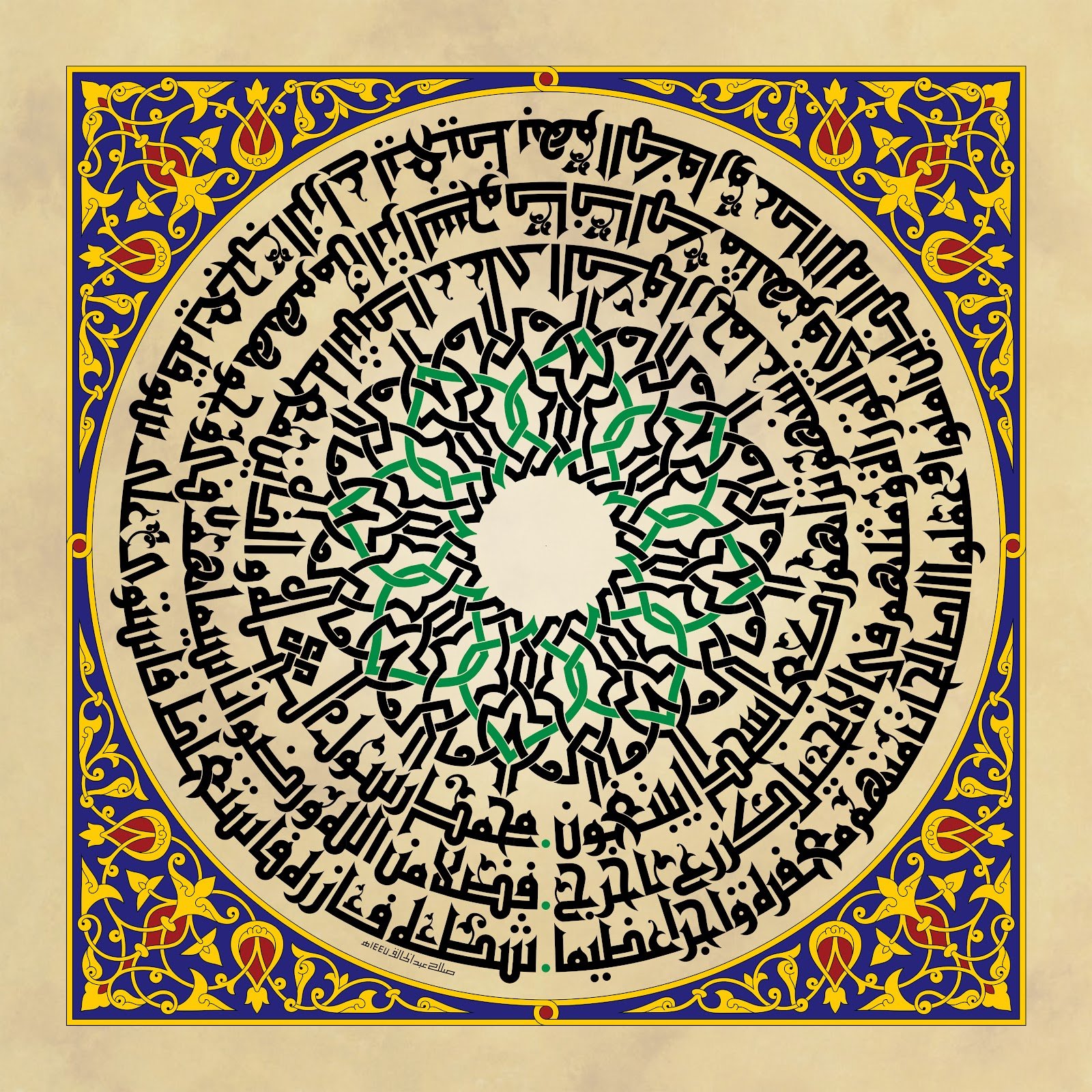
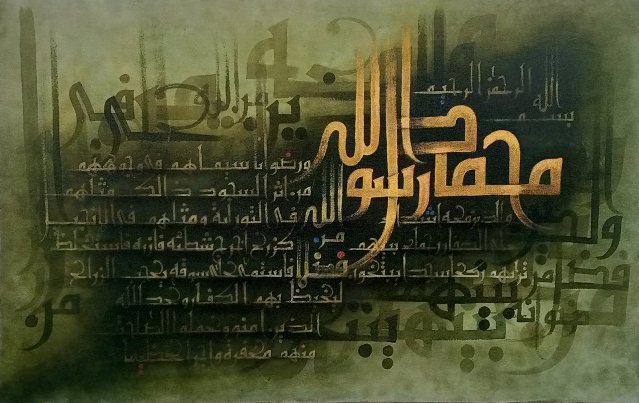
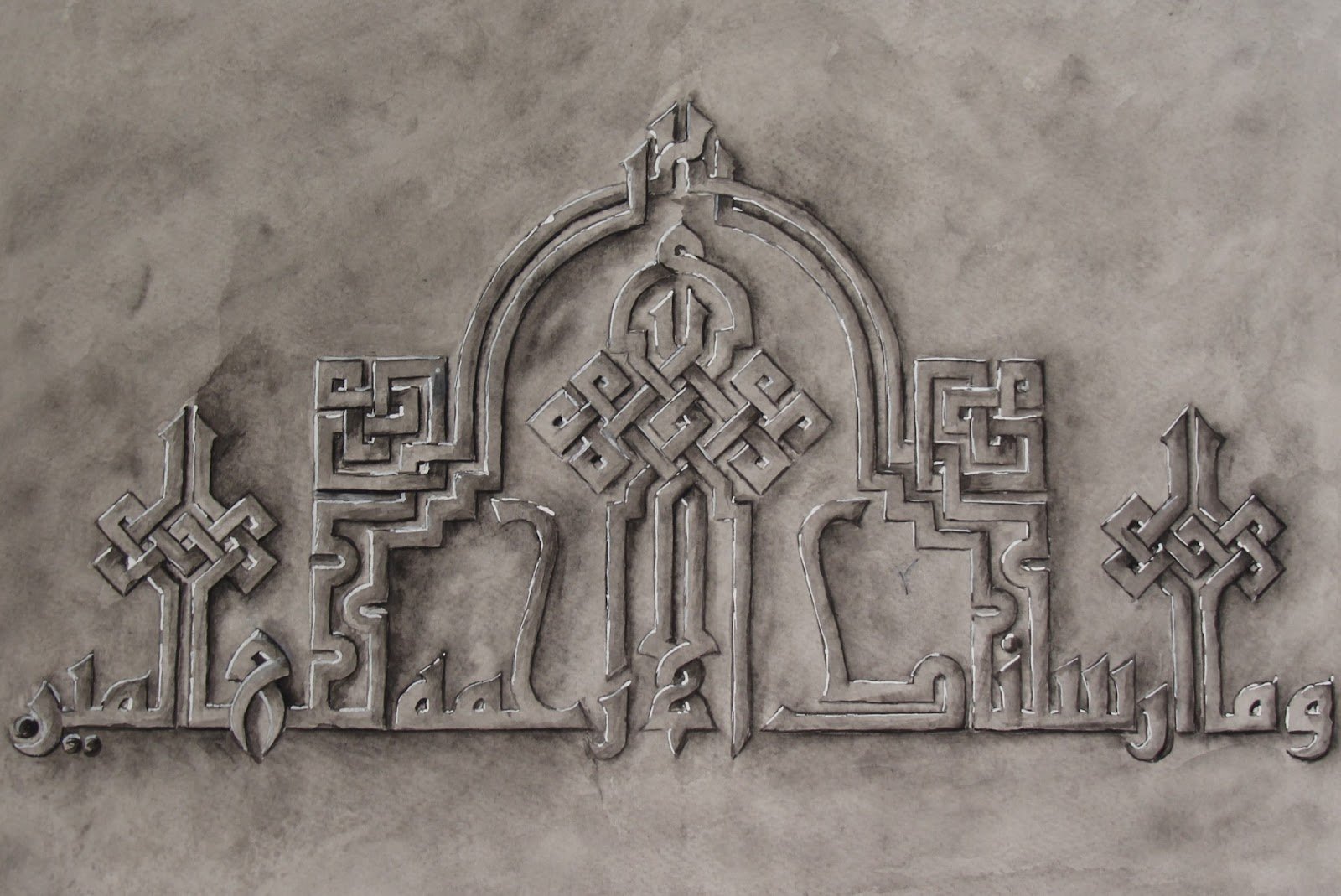
Artist: Salah Abdelkhalek. Egypt
Title: Mohammad Rasoul Allah
Description of artwork:
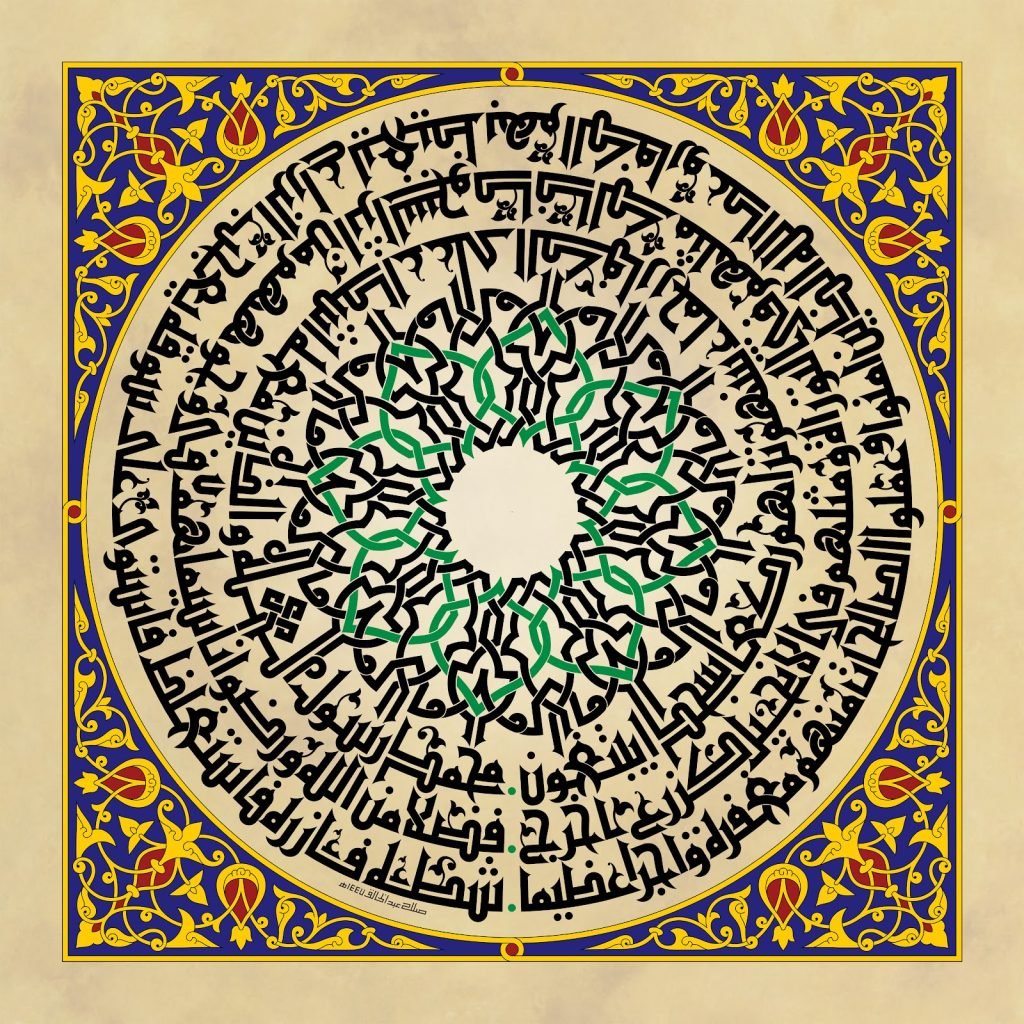
This artwork features a Qur’anic verse, specially chosen and written in recognition of the significance of the competition and its organizers. The piece presents Verse 29, the final verse of Surah Al-Fath: (مُحَمَّدٌ رَّسُولُ اللَّهِ ۚ وَالَّذِينَ مَعَهُ أَشِدَّاءُ عَلَى الْكُفَّارِ رُحَمَاءُ بَيْنَهُمْ ۖ تَرَاهُمْ رُكَّعًا سُجَّدًا يَبْتَغُونَ فَضْلًا مِّنَ اللَّهِ وَرِضْوَانًا ۖ سِيمَاهُمْ فِي وُجُوهِهِم مِّنْ أَثَرِ السُّجُودِ ۚ ذَٰلِكَ مَثَلُهُمْ فِي التَّوْرَاةِ ۚ وَمَثَلُهُمْ فِي الْإِنجِيلِ كَزَرْعٍ أَخْرَجَ شَطْأَهُ فَآزَرَهُ فَاسْتَغْلَظَ فَاسْتَوَىٰ عَلَىٰ سُوقِهِ يُعْجِبُ الزُّرَاعَ لِيَغِيظَ بِهِمُ الْكُفَّارَ ۗ وَعَدَ اللَّهُ الَّذِينَ آمَنُوا وَعَمِلُوا الصَّالِحَاتِ مِنْهُم مَّغْفِرَةً وَأَجْرًا عَظِيمًا)
-This particular verse was selected for several reasons, most notably because it contains all the letters of the Arabic alphabet, including the various forms and positions of the hamzah.
-The verse also highlights a number of attributes of the Prophet Muhammad (peace be upon him) and those who were with him, such as: being firm against disbelievers, merciful among themselves, devoted to bowing and prostration, and bearing visible signs on their faces from the effects of prostration, along with the broader meanings conveyed in the remainder of the verse.
-The artwork is executed in a developed Fatimid Kufic script, accompanied by Andalusian Islamic geometric ornamentation.
-The green color symbolizes the dome of the Prophet’s Mosque in Madinah.
-The materials used in the artwork include black acrylic paint, green acrylic paint, and gold acrylic paint.
-Three small green circles appear at the center of the artwork, symbolizing the beginning and end of each line to facilitate reading the verse in its correct word order.
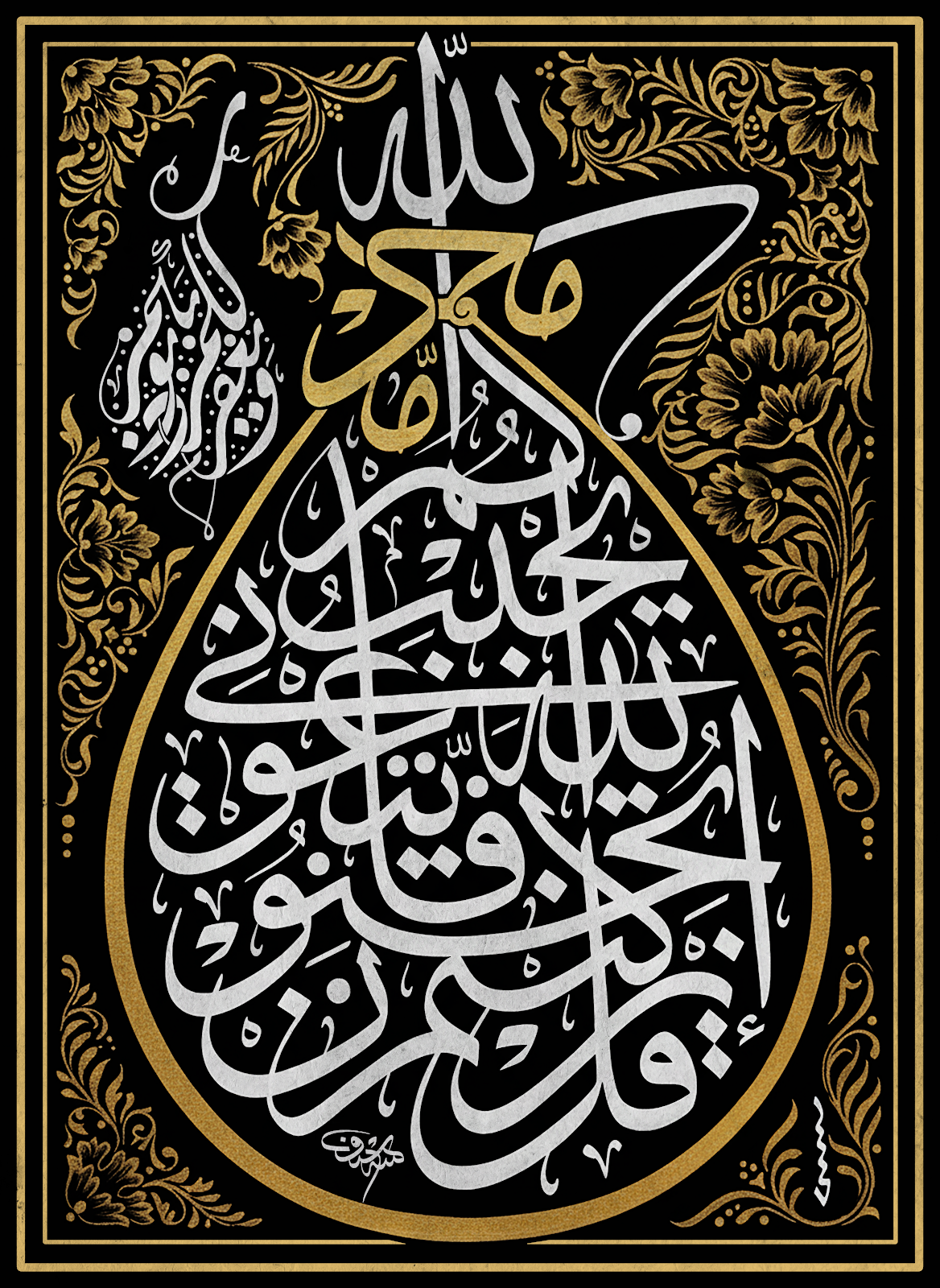
SECOND PRIZE: US $ 500
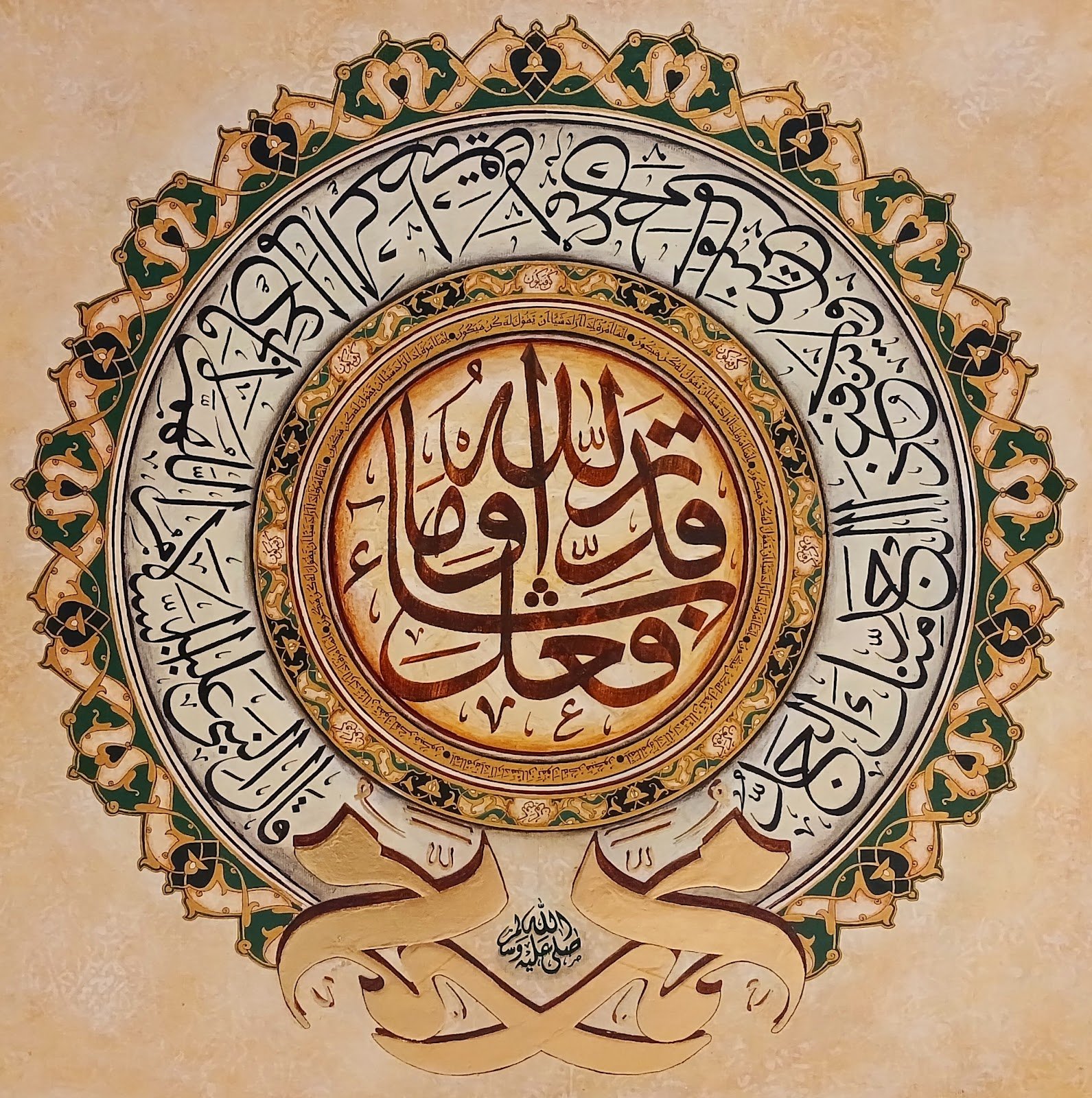
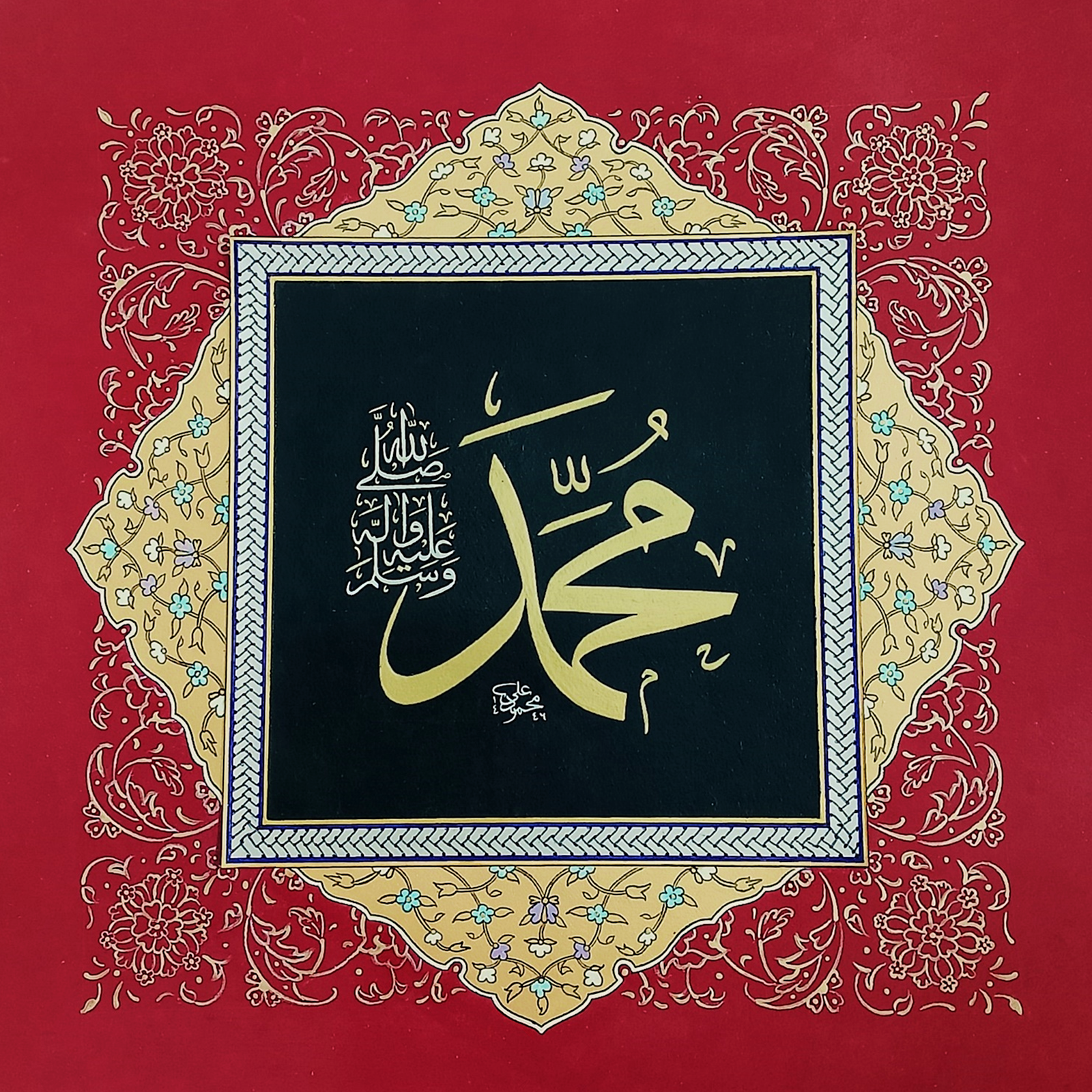
Artist: Mutiullah Wasifi. India
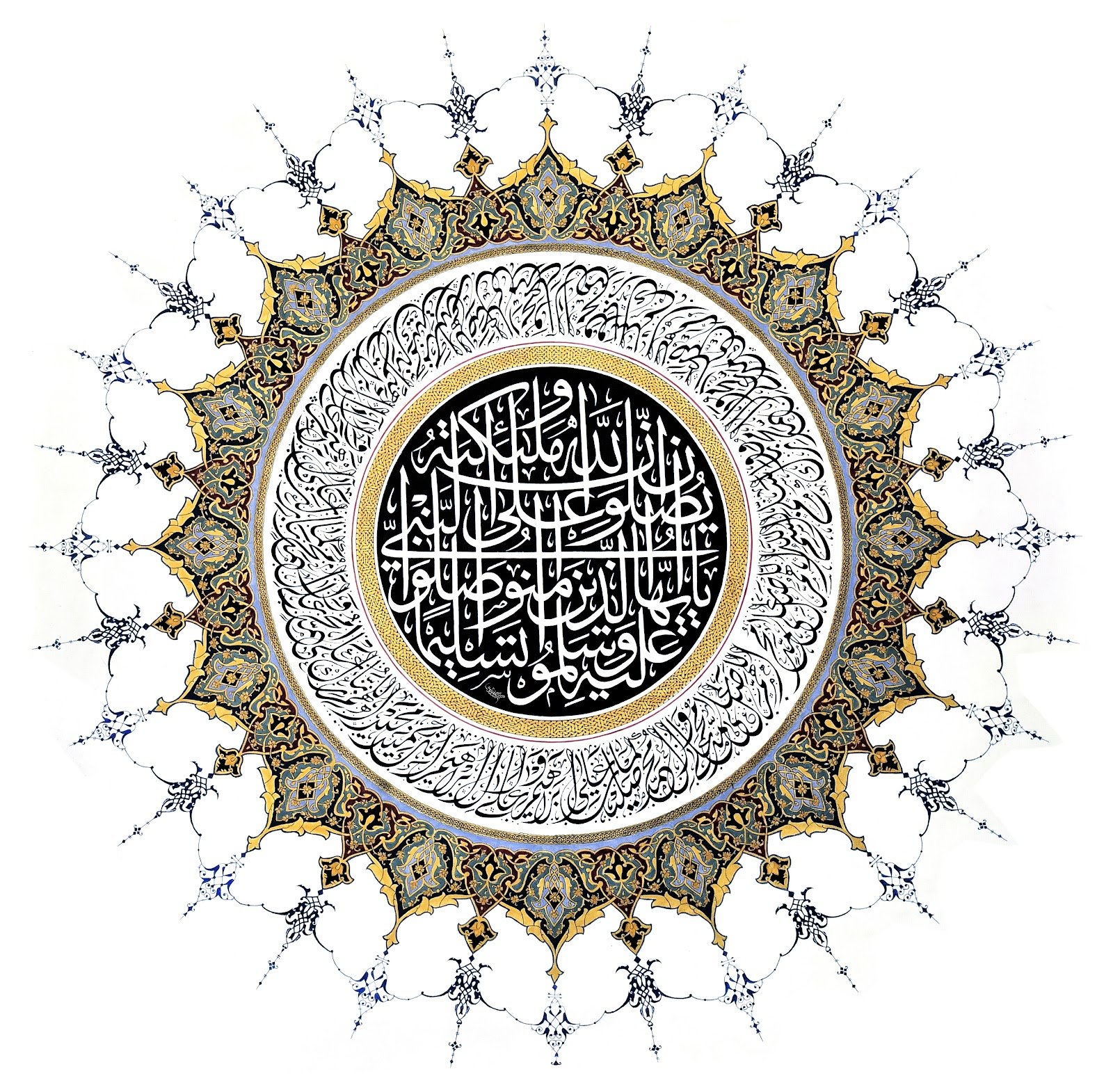
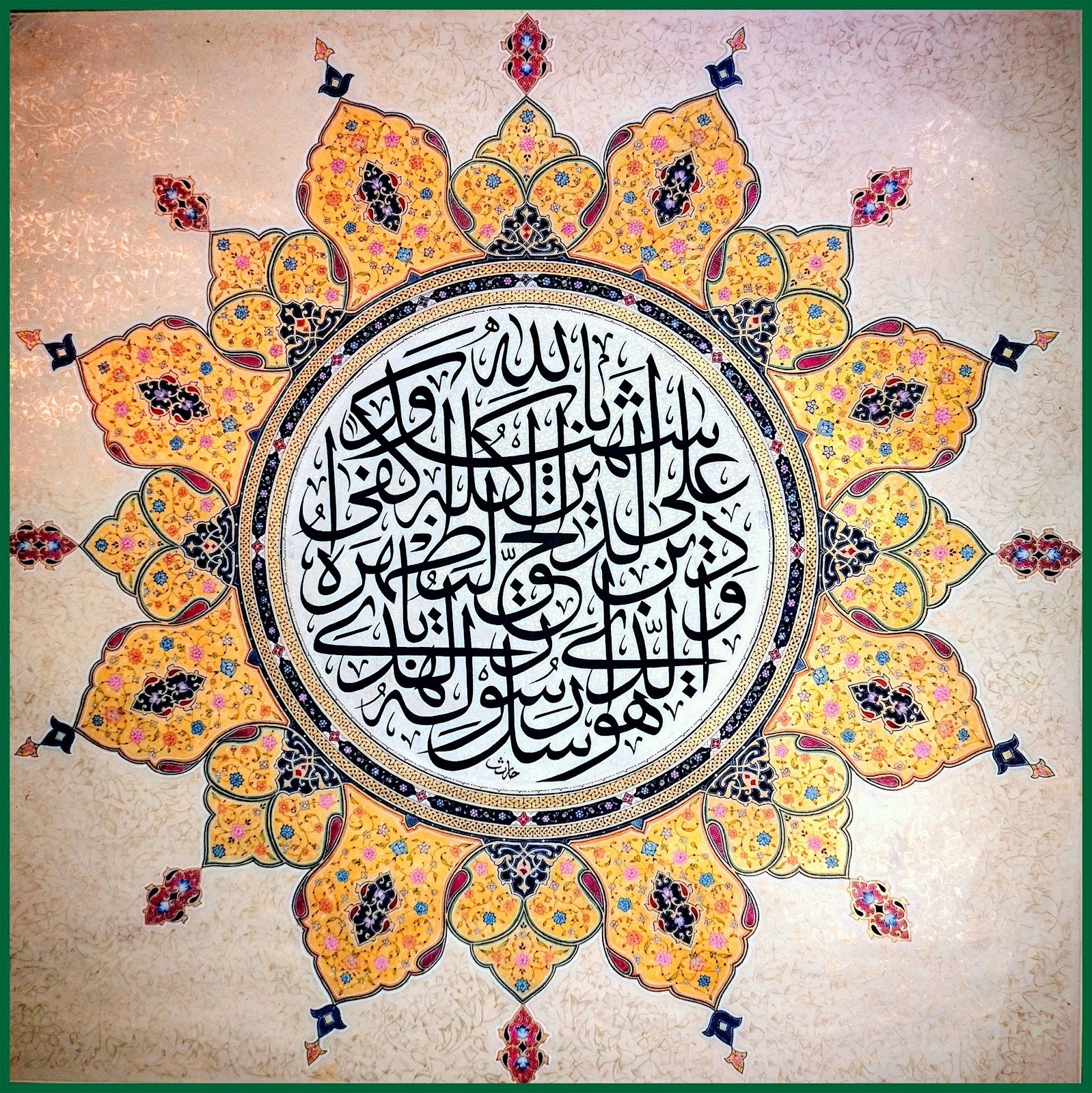
Title: The Divine Light of Hazrat Muhammad (peace be upon him).
Description of artwork:
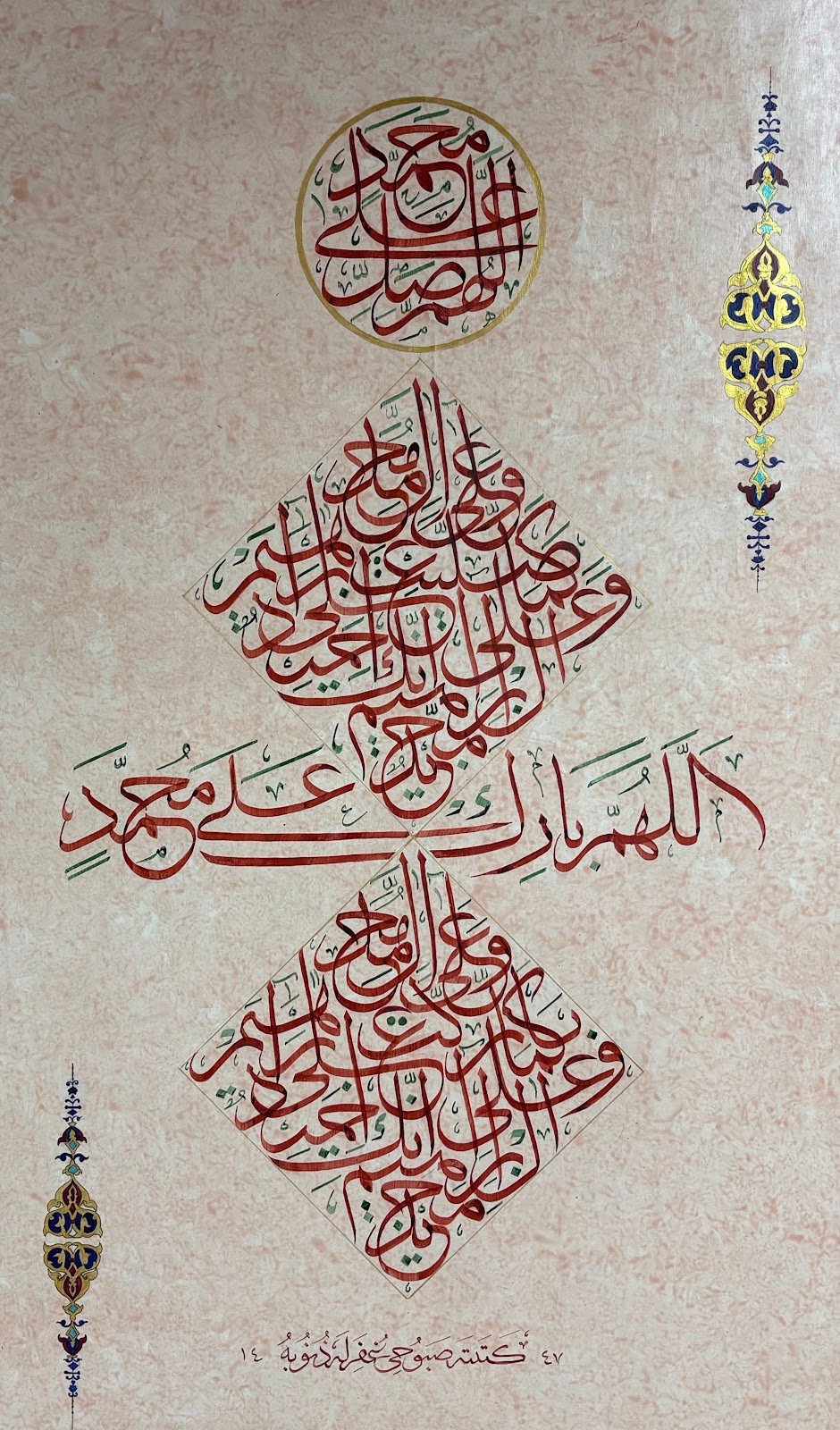
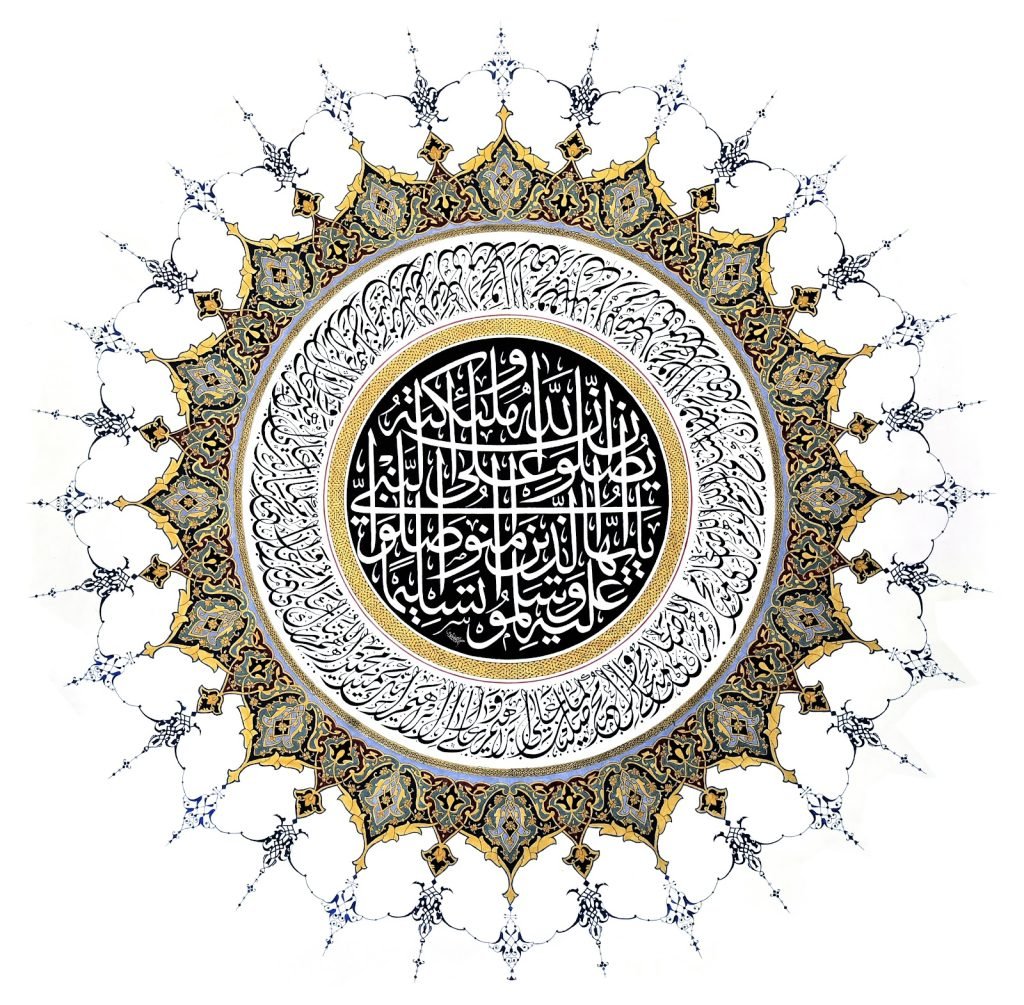
The artwork is designed in a Shamsa (sunburst) style, which is traditionally used to represent divine light and honor.
The central black circle contains a verse from Surah Al-Ahzab (33:56). This is the main verse that commands believers to send blessings upon the Prophet.
إِنَّ اللَّهَ وَمَلَائِكَتَهُ يُصَلُّونَ عَلَى النَّبِيِّ ۚ يَا أَيُّهَا الَّذِينَ آمَنُوا صَلُّوا عَلَيْهِ وَسَلِّمُوا تَسْلِيمًا
“Indeed, Allah and His angels send blessings upon the Prophet. O you who have believed, send blessings upon him and grant him peace.”
Calligraphy Style: The central script is Thuluth, known for its elegant, interconnected letters and upright structure. The outer white ring features a form of Diwani jali script, often used for supplications (du’a) or praises.
Shamsa: This “sunburst” or circular design is called a shamsa. It traditionally symbolizes divine light.
Illumination (Tezhip): The intricate gold and blue patterns surrounding the text are characteristic of Ottoman or Persian illumination. The use of lapis lazuli blue and gold leaf (traditionally) signifies the highest level of respect for the subject matter.
Symmetry: The radial symmetry represents the idea of the “Prophetic light” radiating outwards to all corners of the world.
Spiritual Significance: In Islamic culture, an artwork like this is not just decoration; it serves as a Dhikir (remembrance). When a viewer looks at this piece, they are intended to recite the Salawat (“Allahumma salli ‘ala Muhammad”), fulfilling the command written in the center.
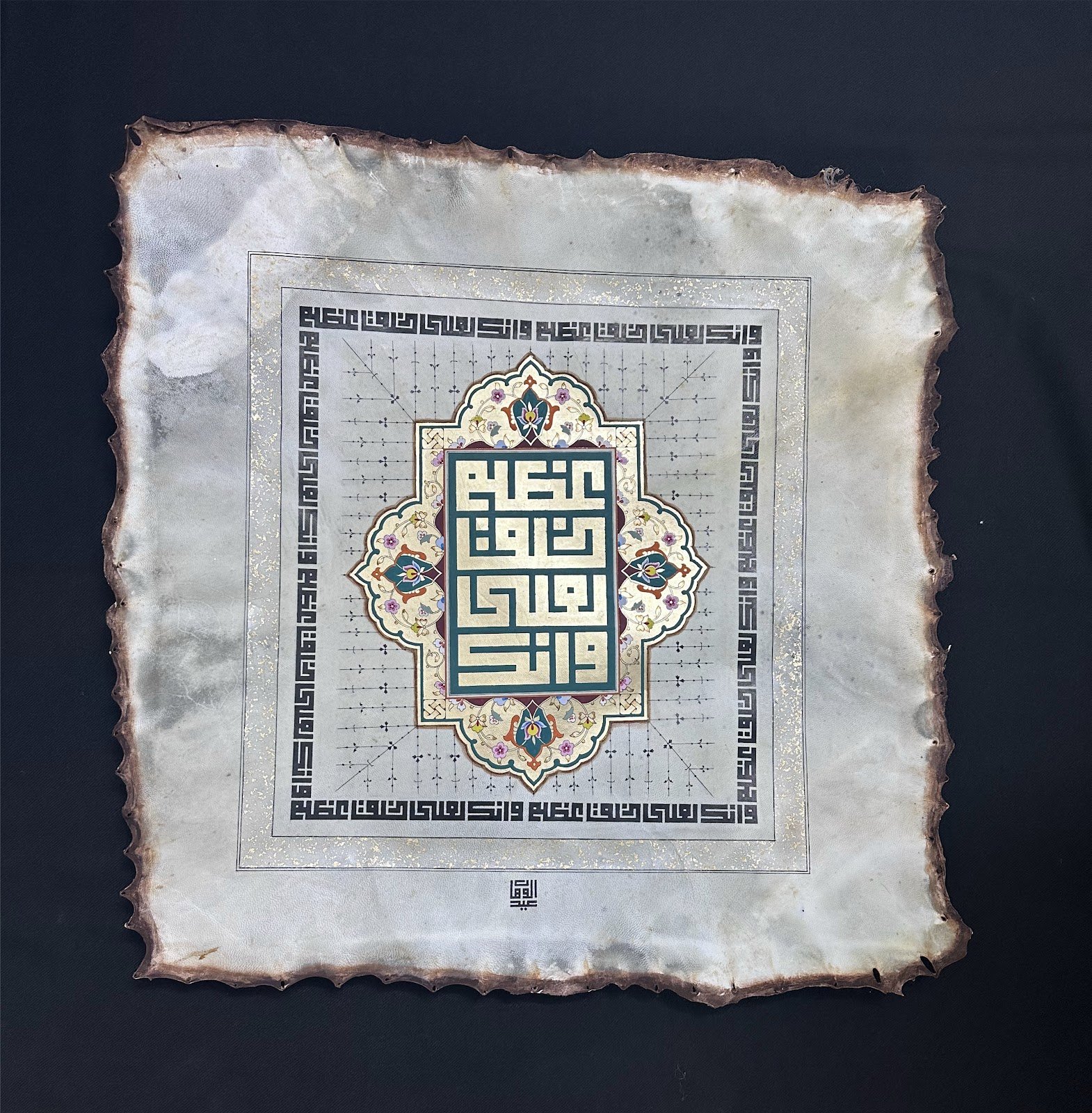
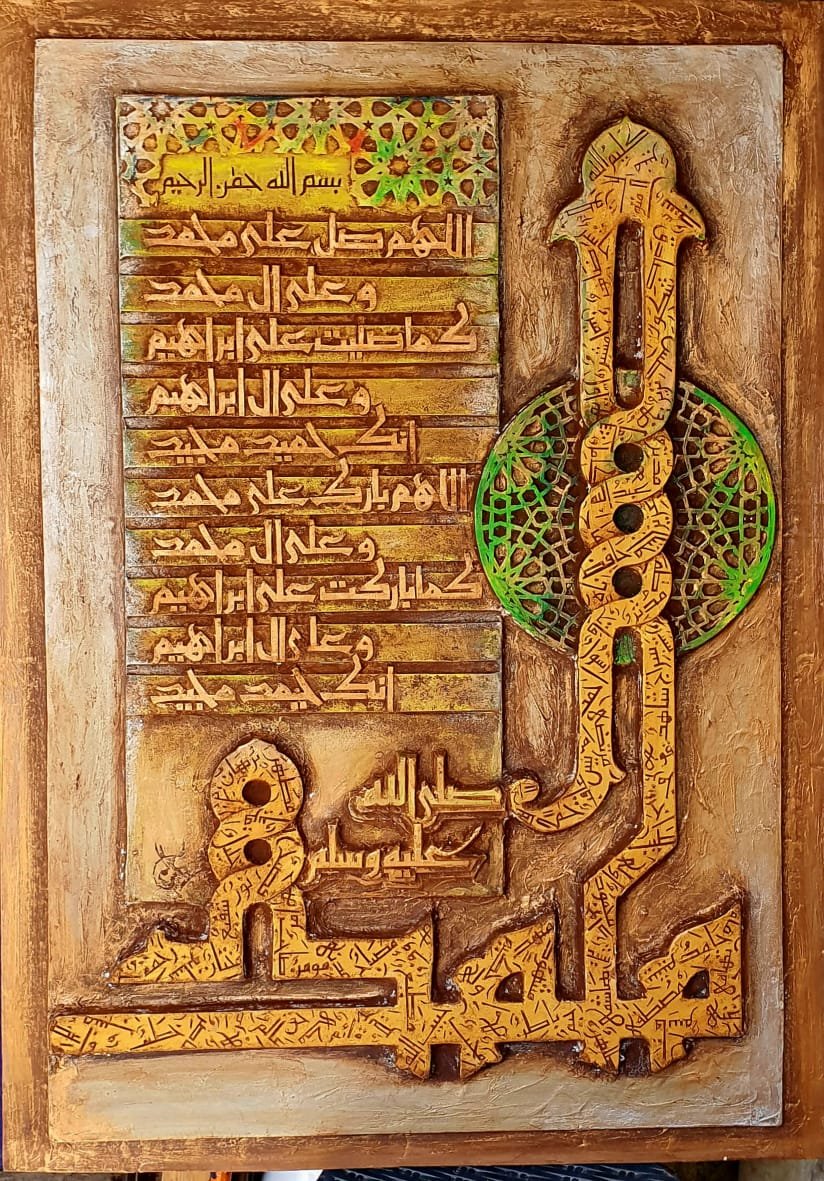
THIRD PRIZE: US $ 200
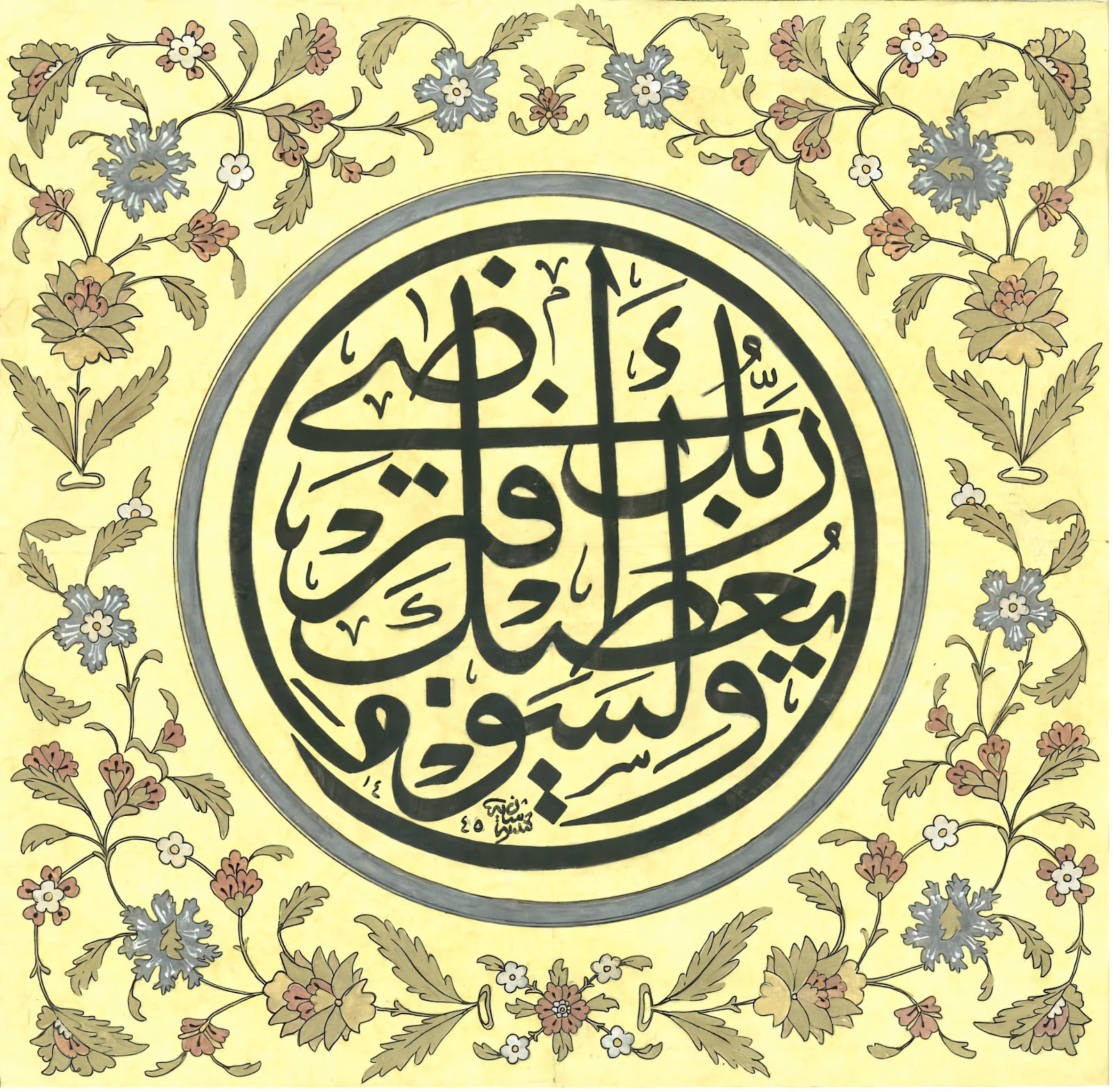
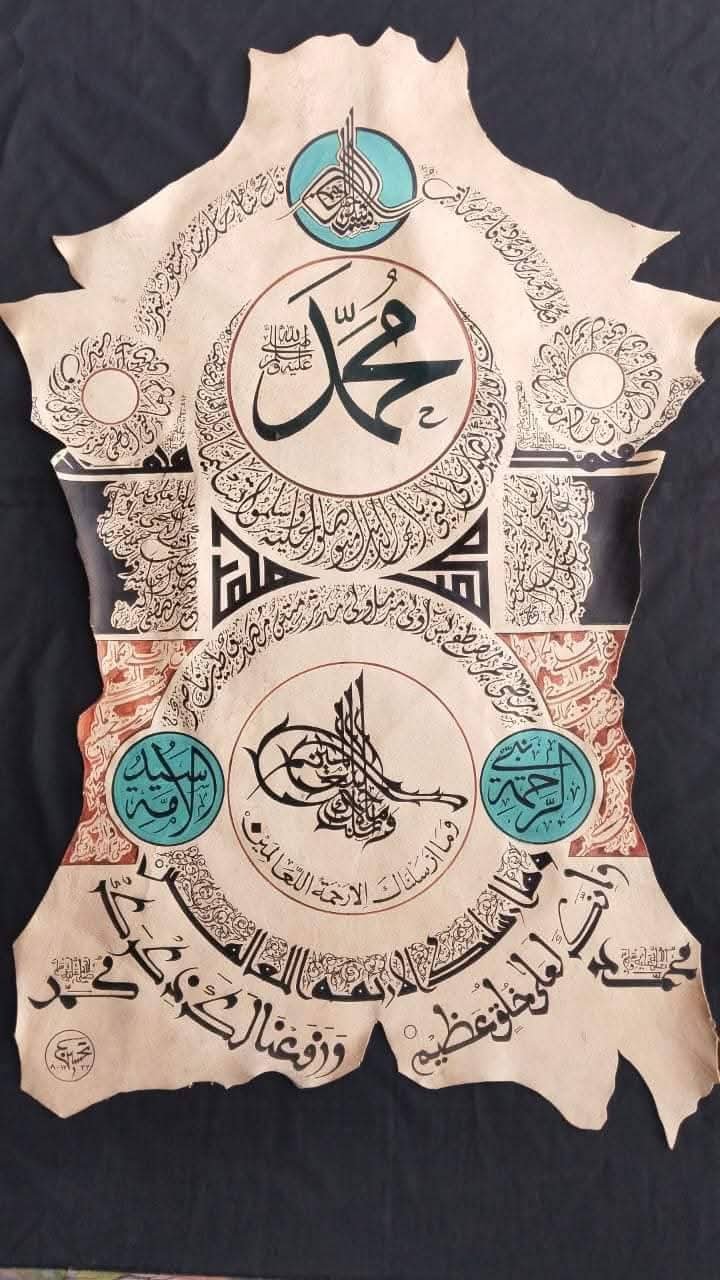
Artist: Abdul Wahab. Pakistan
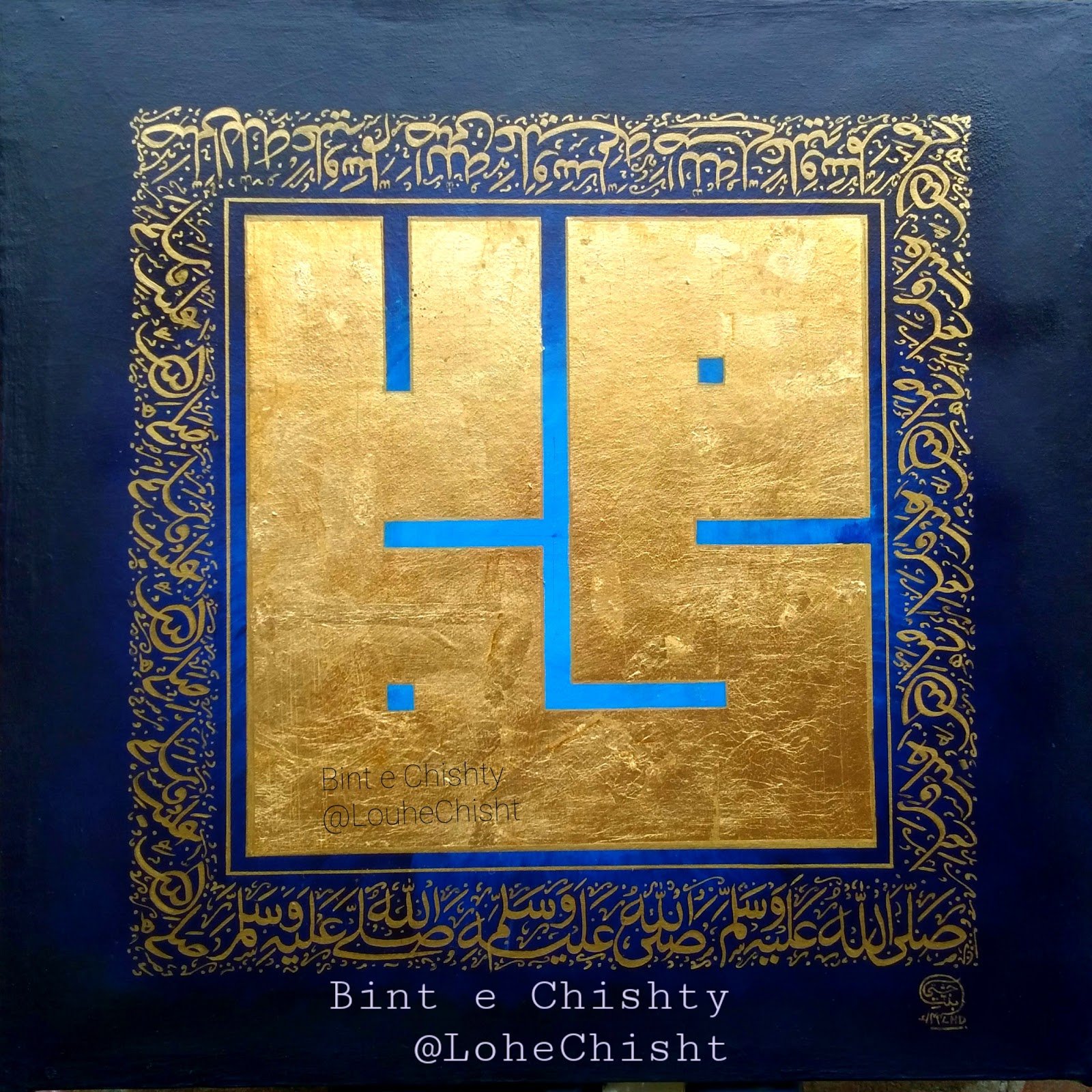
Title: And He (PBUH) is of the Greatest Character.
Description of artwork:
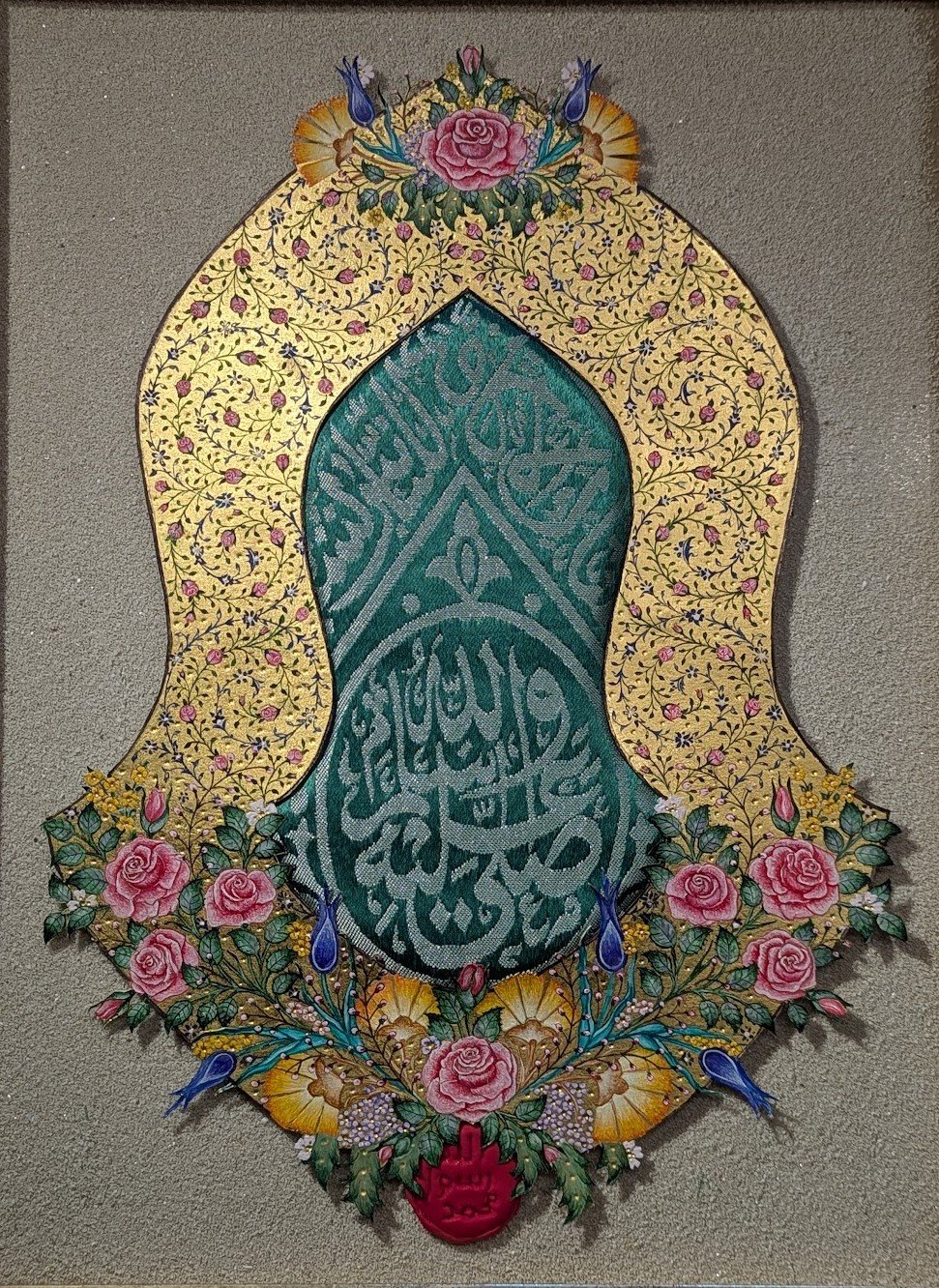
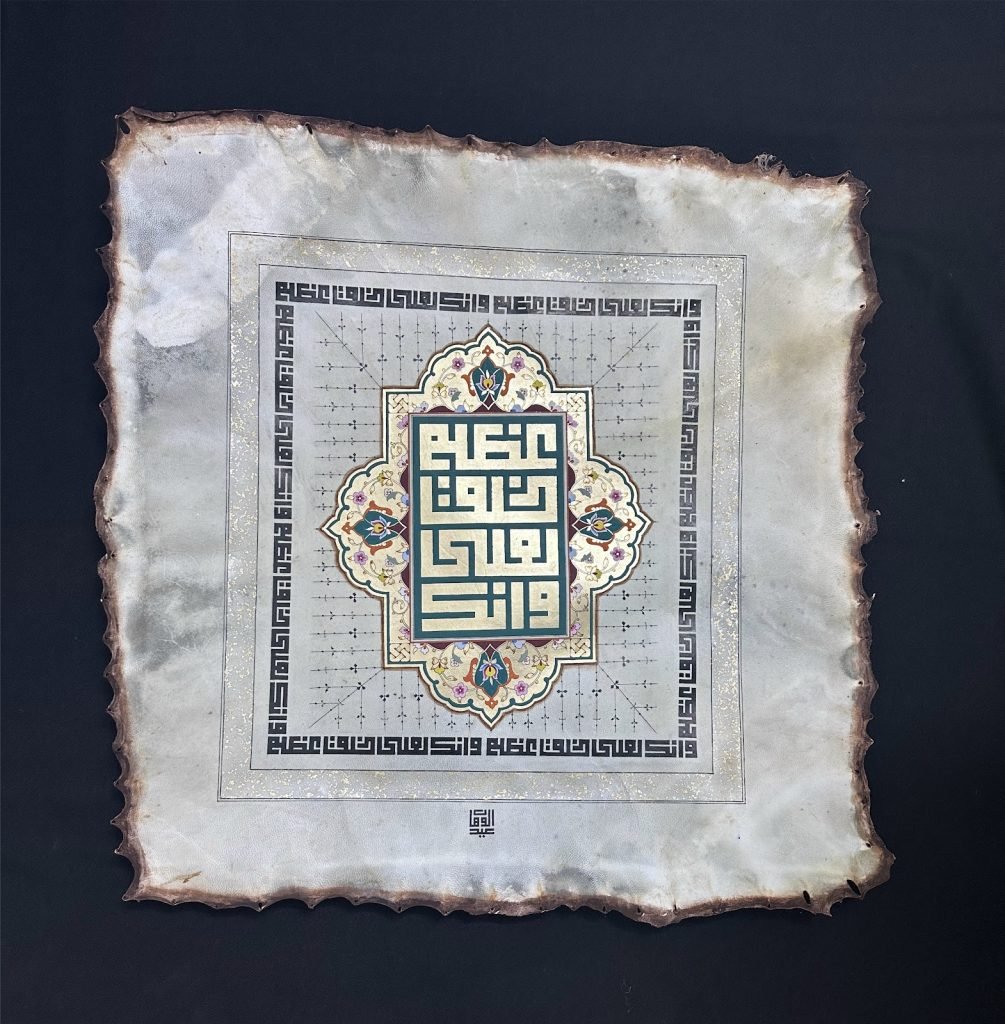
In Kufic calligraphy, there is a square/rectangular structure. The geometric linear style of Kufic script gives it a strong and dignified appearance. The use of green and golden colors around the center enhances its spiritual and royal impression. Features of Illumination (Tezhib) Around the center, there are Islamic floral decorative motifs (Arabesque / Islimi). Very fine craftsmanship is evident in the combination of green, reddish, and golden colors.
Medium: Leather, gold, and watercolor.
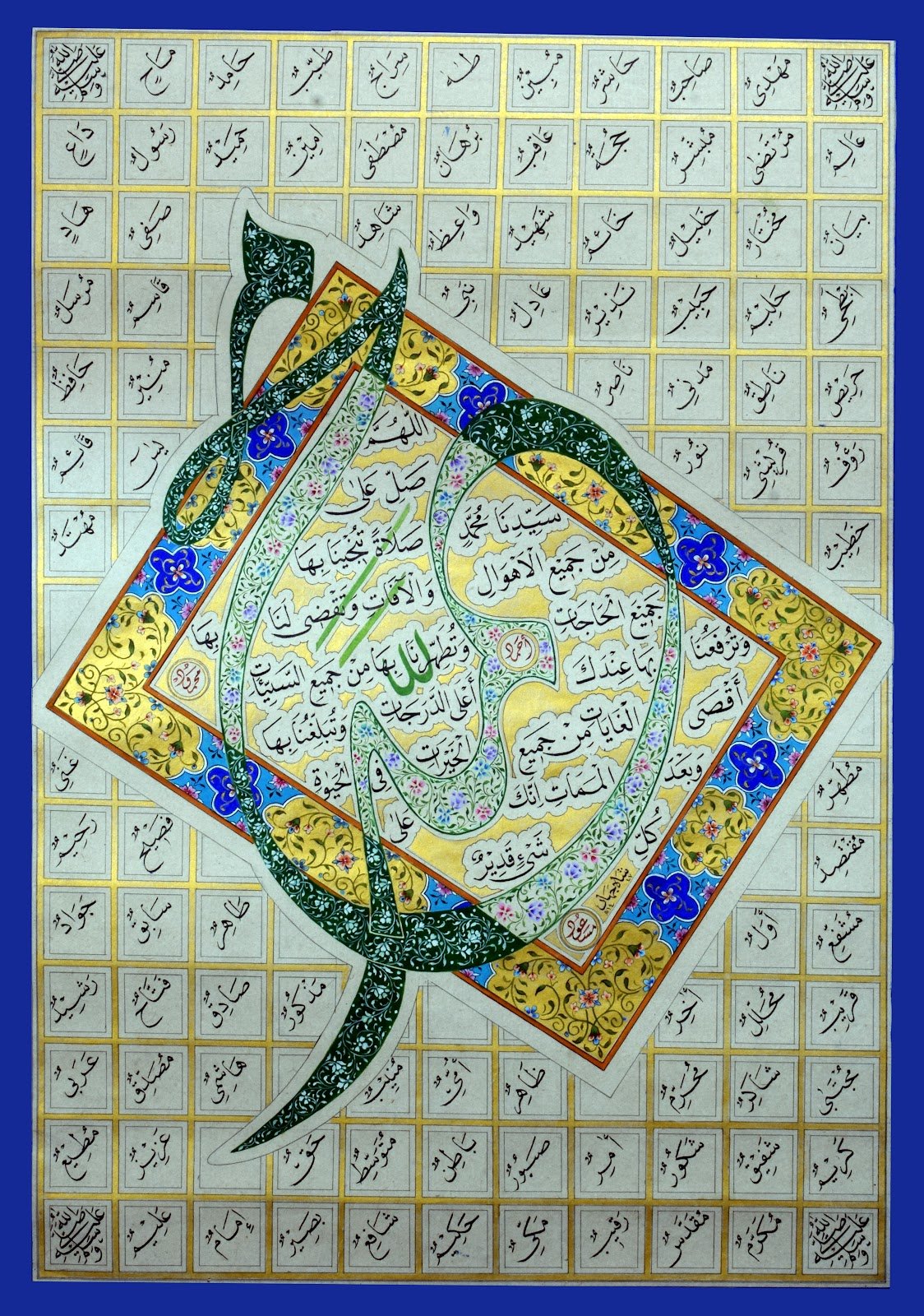
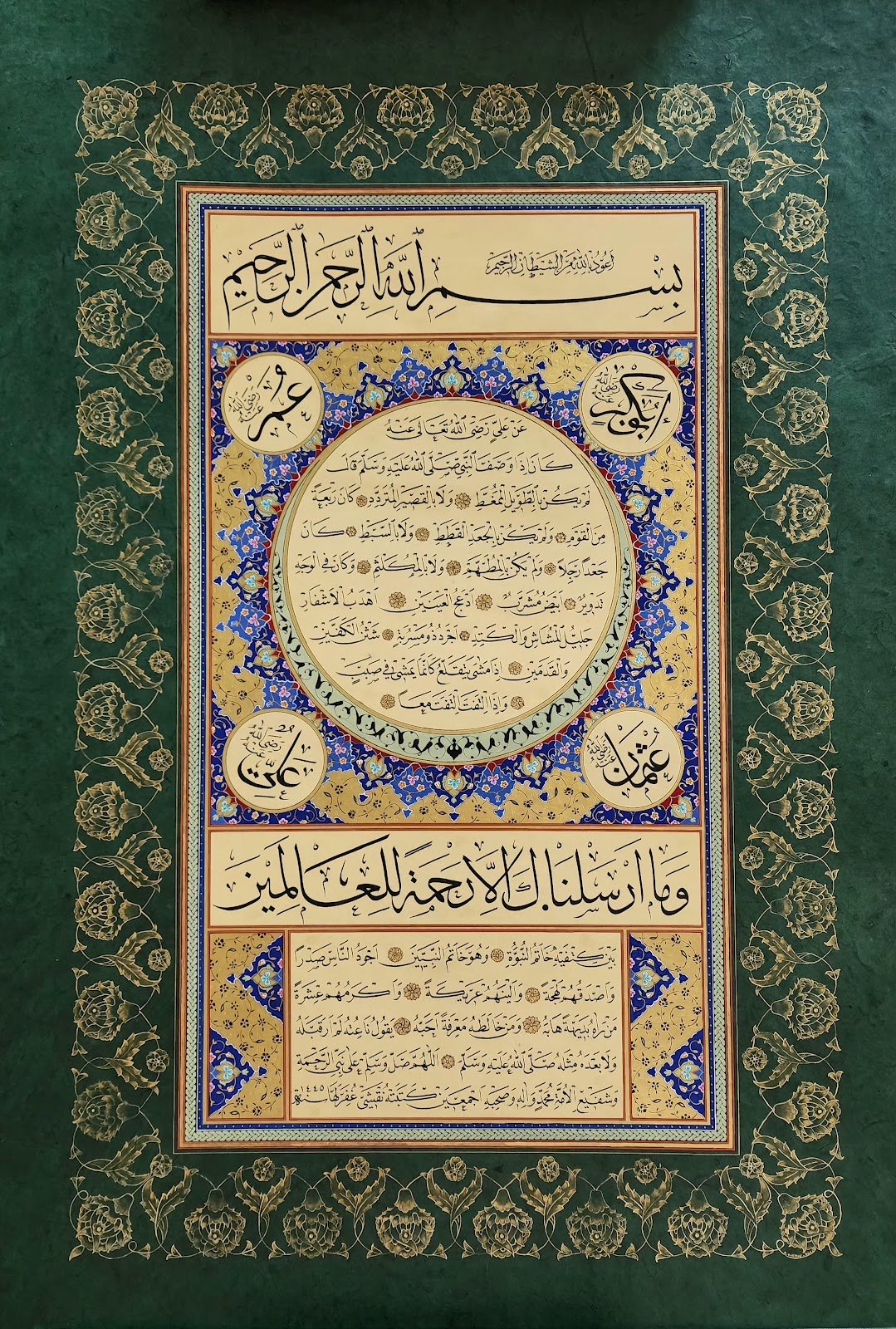
SPECIAL RECOGNITION PRIZE: US $ 100
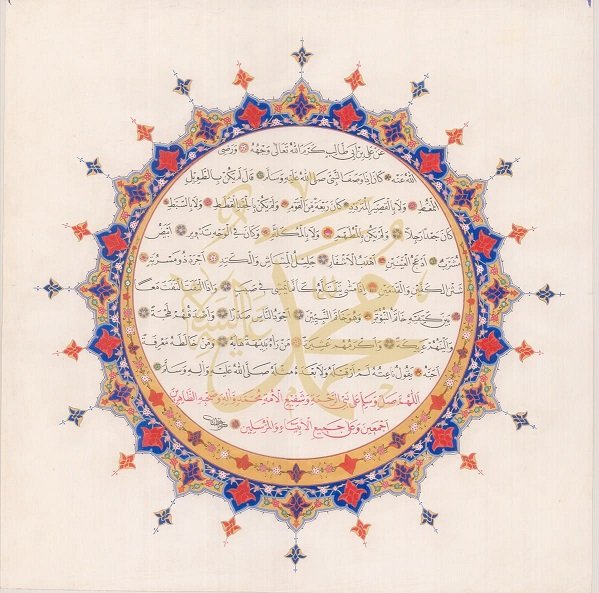
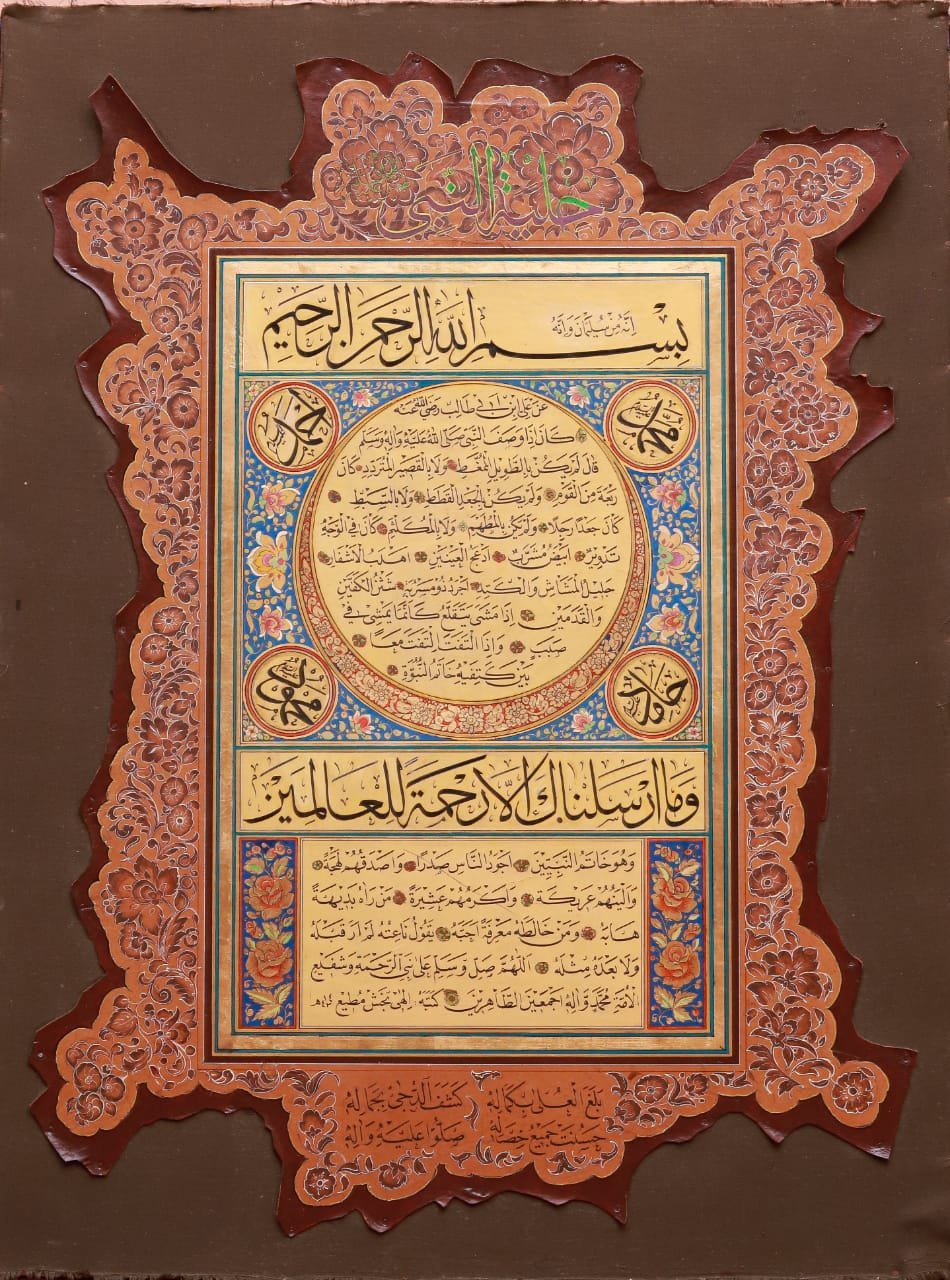
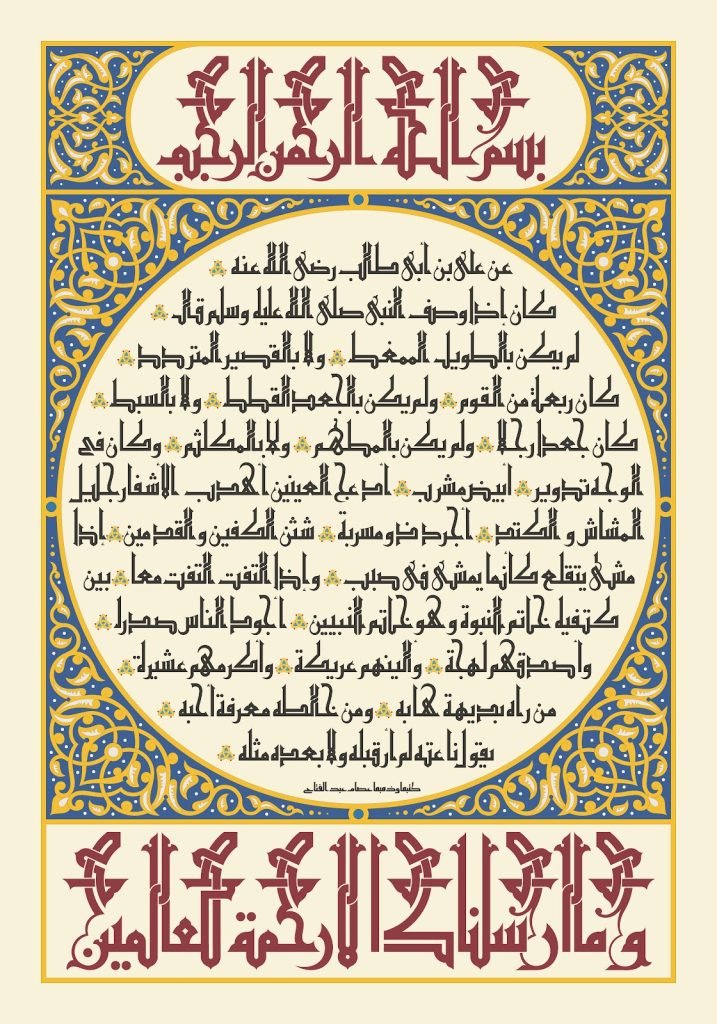
Artist: Essam Said. Egypt.
Title: The Noble Ornament.
Description of artwork:
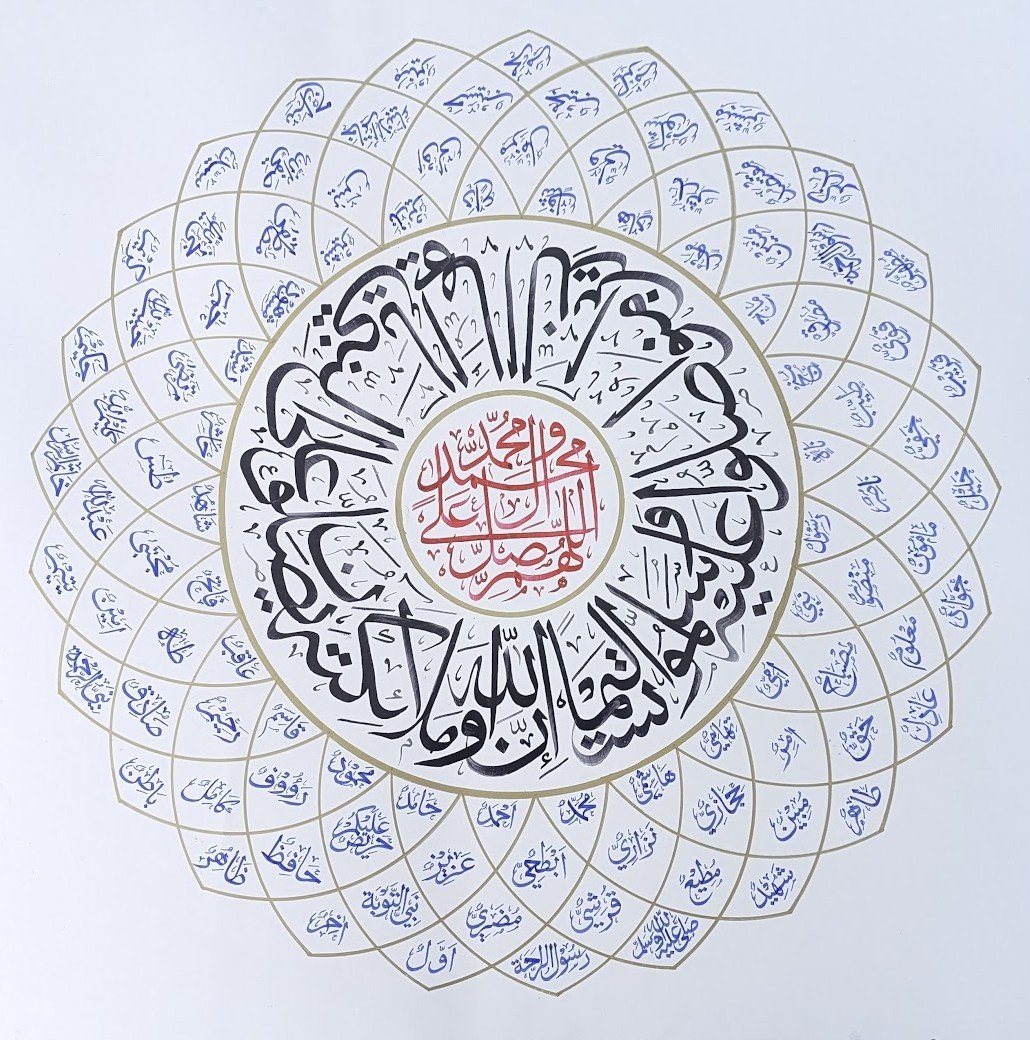
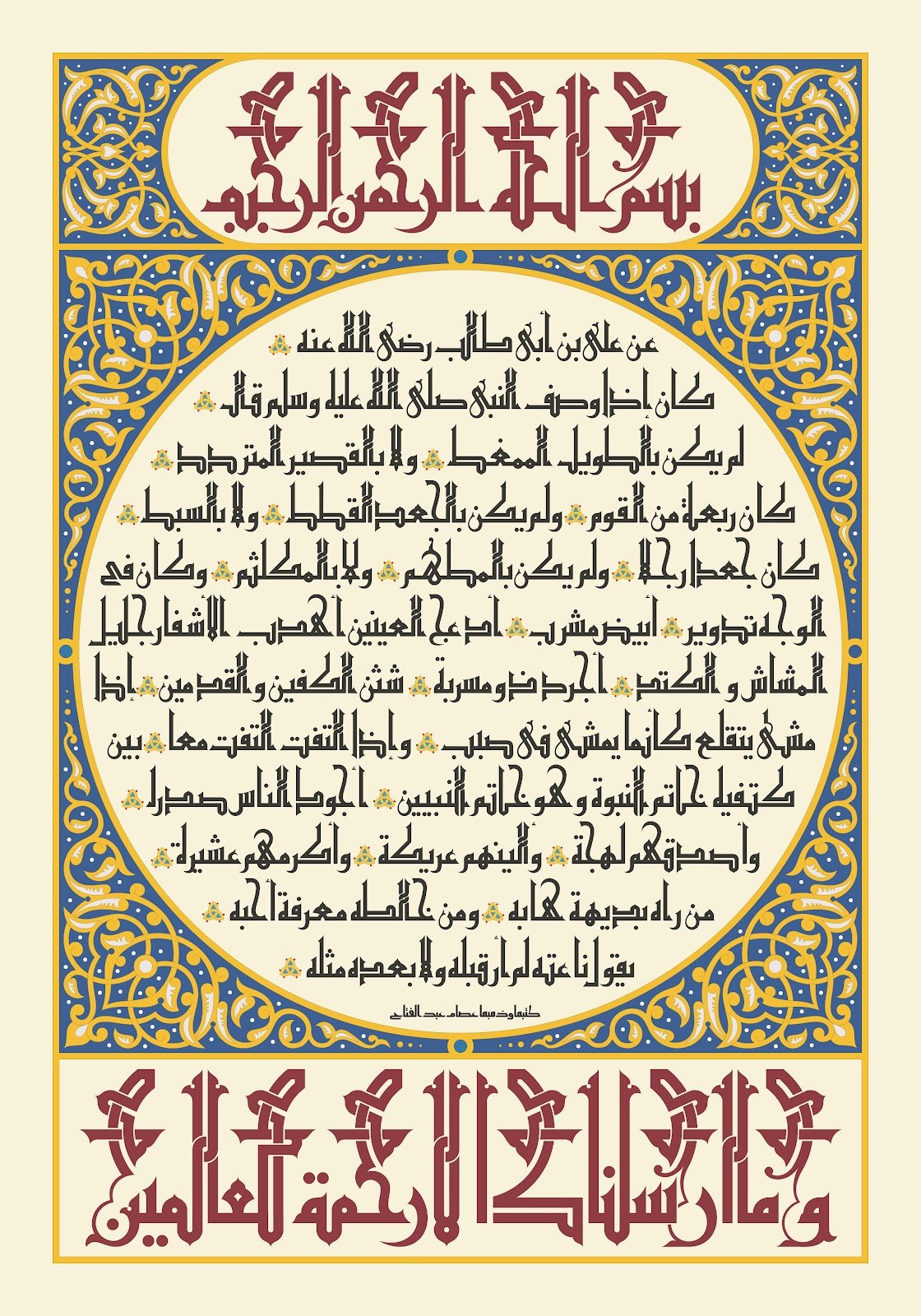
At the top of the plaque is written “In the name of God, the Most Gracious, the Most Merciful,” and at the bottom, “And We have not sent you except as a mercy to the worlds,” and in the middle of the plaque is a description of the noble Prophet. The traditional Hilye as below:
Ali (may God be pleased with him) described the Prophet (peace and blessings be upon him) saying: He was neither excessively tall nor short, but of medium height among people. He was neither curly-haired nor straight-haired, but had wavy hair. He was neither plump nor thin, but had a well-proportioned face, fair-skinned with a reddish tint, with dark eyes and long eyelashes, broad shoulders and back, and a smooth body with a line of hair extending down his chest. He had thick hands and feet, and when he walked, he lifted his feet as if walking downhill. When he turned, he turned his whole body. Between his shoulders was the Seal of Prophethood, the seal of the prophets. He was the most generous of people, the most truthful in speech, the gentlest in temperament, and the noblest in lineage. Whoever saw him unexpectedly was in awe of him, and whoever associated with him came to know him well.
Top Entries For Traditional Contest